
Why Take a Combination Welding Course? There are many reasons to take a combination welding course. As older welders retire, the demand for trained professionals continues to grow. Government investments in infrastructure and renewable energy further drive the need for skilled welders.
After completing a combination welding course, you can pursue advanced welding certifications from organizations like the American Welding Society (AWS) or other governing bodies. Experience and expertise can lead to supervisory roles, including welding inspector or project manager. Your welding foundation can be a stepping stone for other fields, like engineering or fabrication design.
What is Combination Welding?
Combination welding uses multiple processes to construct, repair, and maintain metal parts. These welding techniques include SMAW (Shielded Metal Arc Welding) also known as MIG (Metal Inert Gas), GTAW (Gas Tungsten Arc Welding) also known as TIG (Tungsten Inert Gas), Stick Welding (Shielded Metal Arc), and Flux-Cored Arc Welding.
What is the Role of Welding in Aviation Maintenance?
Welding ensures the structural integrity, safety, and functionality of aircraft. It is used to fix cracks, breaks, or wear in structural components such as fuselage panels, wings, and landing gear. Combination welders repair and maintain jet engine parts, including turbine blades, exhaust systems, and engine mounts. They also restore damaged or corroded parts to their original strength.
Combination welders fabricate custom parts that require specialized designs. Aviation welding also involves working with intricate parts, requiring high precision and adherence to exact specifications.
Combination welders in aviation must follow strict guidelines set by regulatory bodies like the Federal Aviation Administration (FAA). Every weld must meet safety and quality standards to ensure they are flight worthy.
How to Select the Right Welding School
Reputation is a strong indicator of a school’s quality and value. Here are some key factors and steps to guide you in choosing the best welding program for your needs:
Accreditation ensures the school is accredited by a recognized organization, such as the Accrediting Commission of Career Schools and Colleges (ACCSC), which accredits AIM. Why is AIM the right welding school?
- Experienced Instructors – AIM instructors have relevant welding certifications (e.g., AWS) and substantial industry experience.
- Facilities and Equipment – AIM has up-to-date welding machines, tools, and safety gear. We also offer real-world simulations that mimic real-world job conditions.
- Job Placement Assistance – AIM offers job placement support, such as resume assistance, interview preparation, and job leads.
How to Prepare a Successful Application
Preparing a successful application for a Combination Welding program at the Aviation Institute of Maintenance (AIM) involves meeting educational prerequisites, including:
- High School Diploma or GED: Ensure you have a copy of your high school diploma or GED certificate, as AIM requires this for admission.
- Academic Records: Gather transcripts if requested to verify your educational background.
If you have prior experience in welding, fabrication, or related trades, highlight these in your application. Include any work or volunteer roles demonstrating your interest in skilled trades, problem-solving, or attention to detail.
Ensure all personal and academic details are complete and accurate. If submitting a physical copy, fill out the application neatly and professionally. For online submissions, double-check for typos or errors.
To write a strong personal statement, explain why you are interested in welding and how the welding program fits your welding career goals. Mention qualities like attention to detail, a strong work ethic, and a passion for hands-on training. Include reasons for choosing AIM , such as the school’s reputation, curriculum, or welding career opportunities.
A Day in the Life of a Welder in Aviation Maintenance
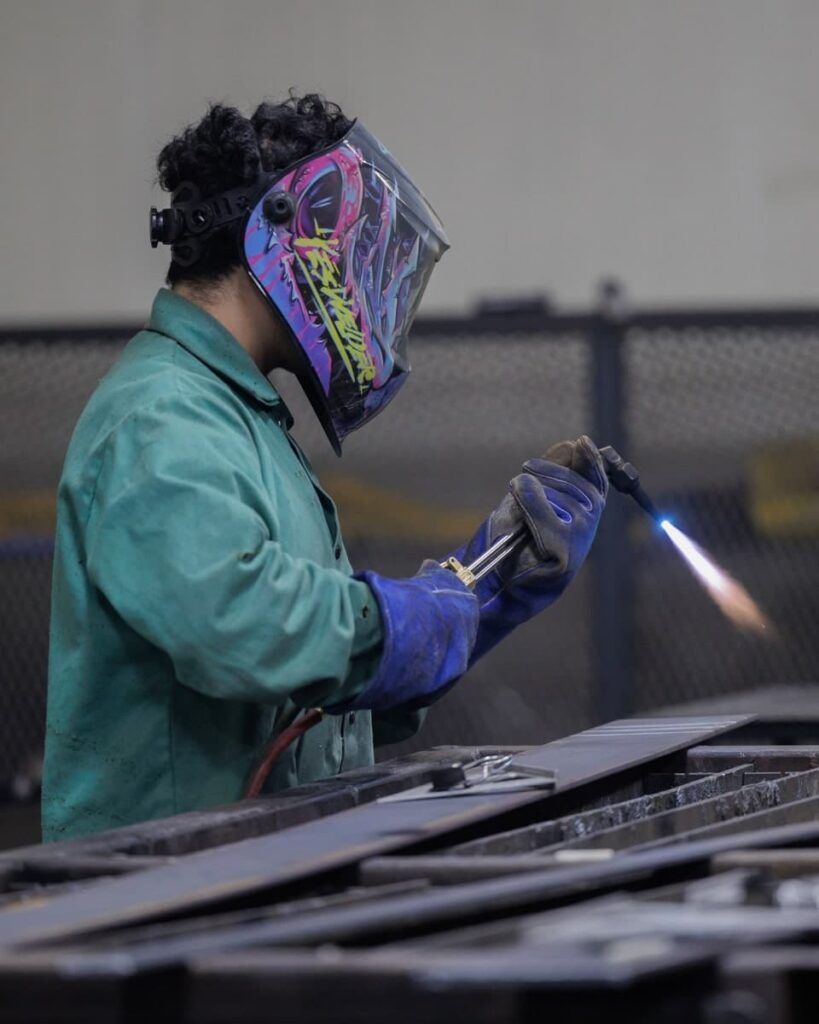
Combination welders in aviation maintenance play an important role in the safety of aircraft. Their work requires precision and attention to detail. Here’s a look at what a typical day might look like:
Morning Briefing
The day often begins with a team briefing, during which welders, technicians, and supervisors discuss the tasks for the day. Combination welders are assigned specific projects or repairs based on priority and aircraft schedules. Safety protocols are reviewed, and necessary personal protective equipment (PPE) is checked.
Inspecting and Assessing Components
Combination welders inspect damaged or worn components like turbine blades, engine parts, or fuselage sections. They determine the type of material (e.g., aluminum, titanium, or stainless steel) to choose the appropriate welding technique. They also review technical blueprints and manufacturer specifications to ensure repairs meet exact standards.
Preparing for Welding
Cleaning and preparing the welded surfaces might involve removing old welds, sanding, or degreasing. Setting up and calibrating welding machines to match the material and technique required, such as TIG (Tungsten Inert Gas) welding, commonly used in aviation.
Welding Operations
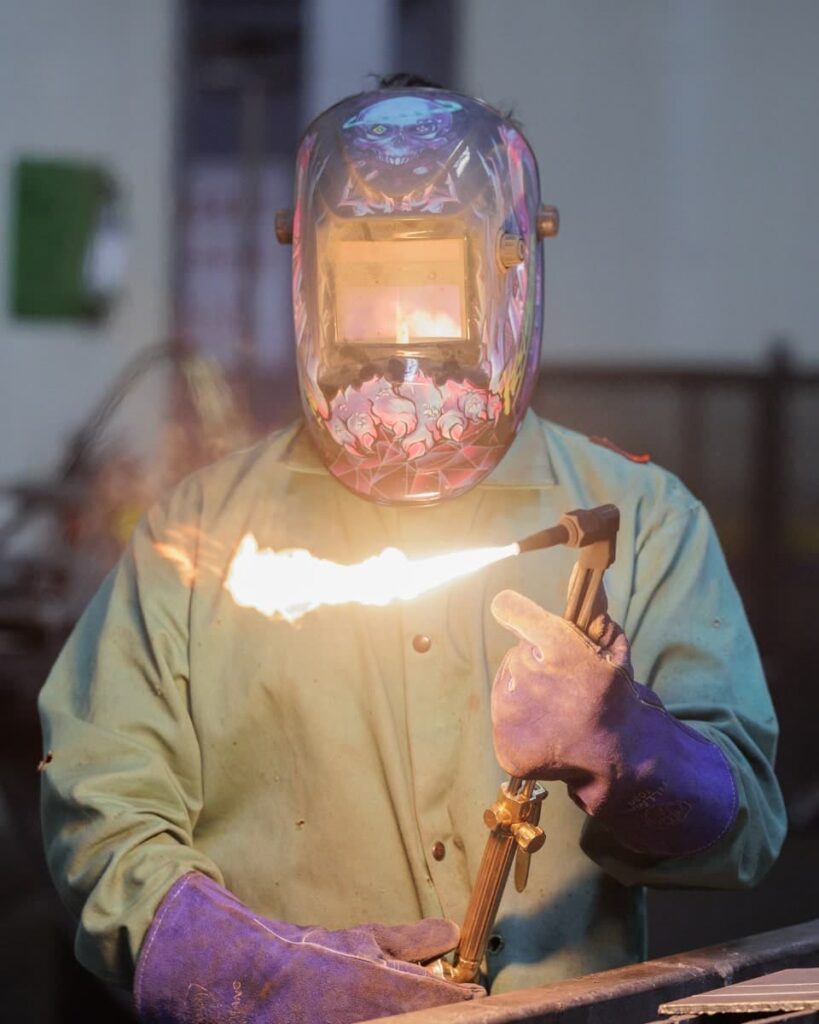
Performing precise welds on critical aircraft components. TIG welding is frequently used in aviation for its accuracy and ability to work on thin materials without compromising strength. Welds must meet strict aviation safety and quality standards set by governing bodies like the FAA or EASA. They must work efficiently to minimize aircraft downtime while maintaining the highest quality.
Quality Control and Testing
Examining welds for visible defects, such as cracks, porosity, or uneven seams, and conducting tests like X-rays, ultrasonic testing, or dye penetrant inspections to ensure weld integrity. Recording work performed and test results for compliance with regulatory requirements.
Maintenance of Tools and Equipment
Cleaning and maintaining welding tools, welding equipment, and workspaces to ensure readiness for future tasks. Verifying stock levels of consumables like welding rods, gas cylinders, and protective gear.
Continuous Learning
Combination welders often dedicate time to learning about new materials, welding techniques, and regulations to stay current and pursue advanced welding certifications or training sessions to improve skills and welding career opportunities.
Is Welding a Good Career Choice?
Welding can be an excellent career choice for individuals who enjoy hands-on, technical work and are looking for a profession with strong demand, good earning potential, and opportunities for advancement. Here are some key reasons welding is a compelling career choice and considerations to help determine if it’s the right path for you.
High Demand for Skilled Welders
Welding skills are essential across construction, manufacturing, aerospace, automotive, shipbuilding, and energy industries. Many industries face a shortage of skilled tradespeople, increasing demand for qualified Combination welders.
Short Training Period
The Combination Welding program at AIM can be completed in as little as 8 months, allowing you to enter the workforce quickly.
Considerations Before Choosing Welding
Physical Demands
Welding is a physically demanding job where you stand for long periods, work in tight spaces, or perform repetitive motions. It may also involve working in conditions like high heat, noise, or outdoor environments.
Safety Concerns
The profession requires strict adherence to safety protocols to prevent injuries from burns, fumes, or accidents. Proper training and personal protective equipment (PPE) minimize risks.
What are the Job Prospects After Completing a Combination Welding Course?
Job prospects are abundant, given the high demand for qualified professionals and the versatility of welding skills. Here’s an overview of the job prospects and potential career paths:
Entry-Level Positions
After completing a combination welding course, graduates are qualified for entry-level roles in roles including:
- Certified Welding Inspector (CWI): inspect the quality of welds, often in supervisory roles.
- Welding Foreman or Supervisor: oversee welding teams and managing projects.
- Welding Engineer: designing and testing welding procedures and welding techniques.
- Non-Destructive Testing (NDT) Technician: inspect welds using X-rays, ultrasonic testing, or magnetic particle testing without damaging materials.
Final Thoughts and Insights
With a clear understanding of why enrolling in a combination welding course is beneficial, it’s time to explore how the Combination Welding Training Program at the Aviation Institute of Maintenance (AIM) can set you on the path to a rewarding new career. Reach out to us today to learn more.
FAQs
What is a combination welding course?
A combination welding course teaches several welding methods in one program. Students learn processes like Shielded Metal Arc Welding (SMAW), Gas Metal Arc Welding (MIG), and Gas Tungsten Arc Welding (TIG). Training covers weld setup, metal prep, safety, and hands-on weld practice. This broad training helps students work with different metals and job tasks.
What welding processes are taught in a combination welding program?
Most programs teach three main welding methods: SMAW, MIG, and TIG welding. Students learn how each process works and when to use it. Classes also include cutting methods, blueprint reading, and welding safety.
How long does it take to complete a combination welding course?
A combination welding program at AIM takes eight months to complete. Students spend time in class and welding labs each week. The goal is to build strong weld skills in several welding methods.
Is a combination welding course good for beginners?
Yes. Many students start with little or no welding experience. Instructors teach basic welding skills first. Students then move into MIG, TIG, and stick welding practice.
What jobs can you get after a combination welding course?
Graduates can apply for entry-level welding jobs in several industries. Common roles include structural welder, pipe welder helper, and fabrication shop welder. Training in multiple welding methods helps graduates qualify for more job tasks.


